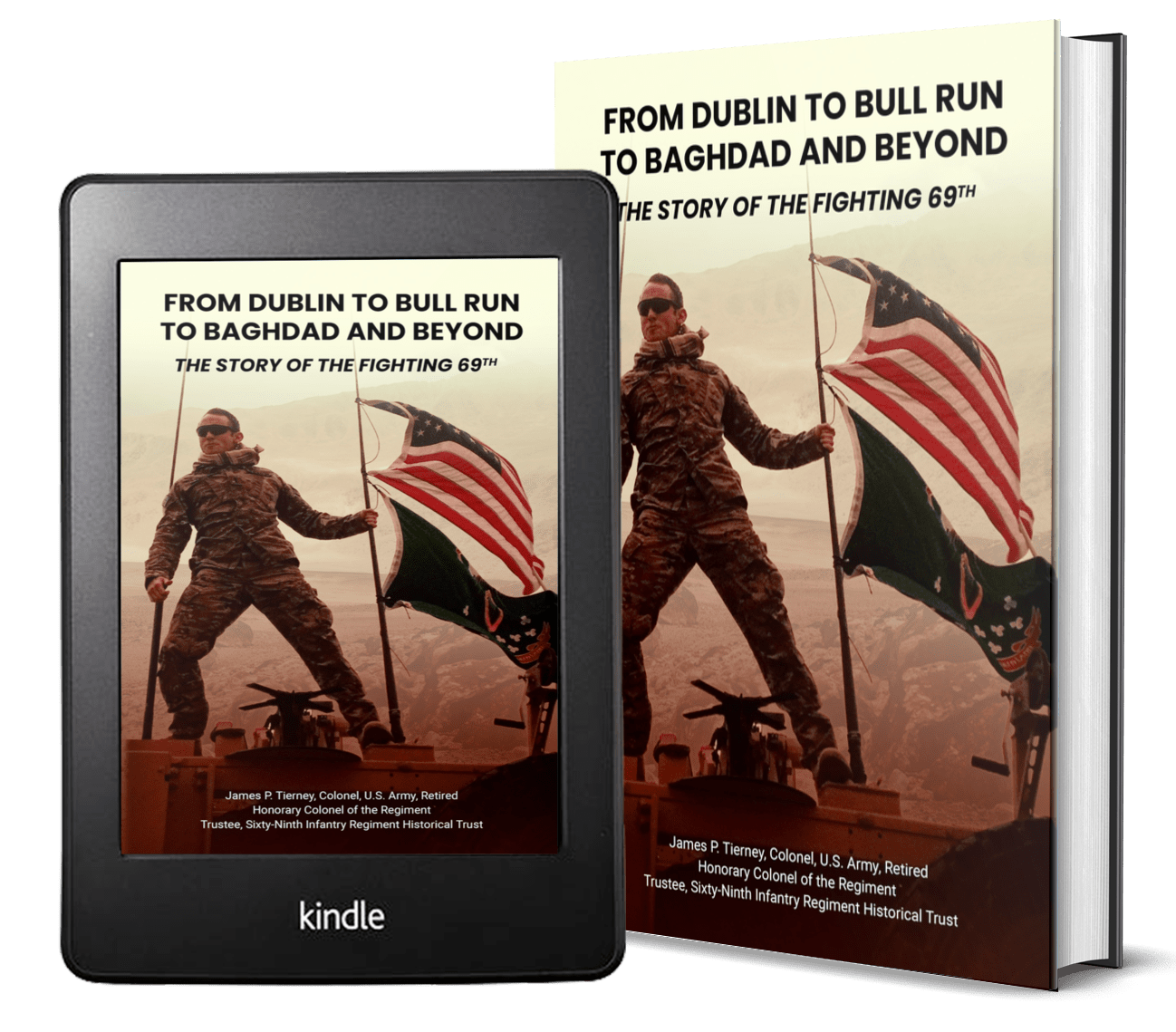
The 69th Infantry Regiment, known as “The Fighting 69th,” has played a pivotal role in America’s military history, from its origins during the American Civil War to its involvement in 21st-century conflicts like Operation Iraqi Freedom. The regiment’s long-standing tradition of valor, forged in the crucible of battle, has evolved alongside the changing nature of warfare, adapting its tactics, leadership, and structure to meet the demands of modern combat. As detailed in From Dublin, to Bull Run, to Baghdad and Beyond: The Story of the Fighting 69th by James P. Tierney, the regiment’s journey reflects the broader transformation of the U.S. military, while maintaining its unique identity and commitment to excellence.
Civil War Origins: The Fighting 69th Emerges
The 69th Infantry Regiment first earned its reputation for bravery during the Civil War, most notably at the First Battle of Bull Run in 1861. Comprised largely of Irish-American immigrants, the regiment quickly became known for its fierce fighting spirit, despite suffering heavy casualties. Led by figures like Colonel Michael Corcoran and Thomas Francis Meagher, the 69th embodied the dual identity of Irish immigrants in America—fighting not only for their adopted country but also for recognition and respect.
This period cemented the regiment’s reputation for courage and tenacity, and its nickname, “The Fighting 69th,” would carry forward into future conflicts. However, the challenges they faced in the 19th century were vastly different from the evolving nature of warfare in the 20th and 21st centuries.
World Wars: Transitioning into Modern Warfare
As warfare transitioned from the age of muskets and cannons to that of machine guns and tanks, the 69th Infantry Regiment adapted to meet the challenges of the 20th century. During World War I, the regiment became part of the 165th Infantry Regiment and was integrated into the famed Rainbow Division. In the trenches of France, the 69th fought in brutal conditions, contributing to key victories at battles like the Meuse-Argonne Offensive. Their heroism in World War I further solidified their status as one of the U.S. Army’s most respected units.
The Second World War saw the regiment’s continued involvement in major campaigns, though by this time, the unit had evolved both in composition and tactics. With the advent of new military technologies such as aircraft, armored vehicles, and more advanced artillery, the regiment had to adapt to a much faster, more mechanized form of warfare. Its ability to transition from the trench warfare of World War I to the mobile, global conflict of World War II is a testament to the regiment’s flexibility and enduring relevance.
Cold War and Beyond: New Frontiers in Warfare
The post-World War II era introduced even more complexities to modern military strategy, as the 69th Infantry Regiment found itself in the midst of the Cold War. The regiment was reorganized and deployed during various conflicts, including the Korean War, though its participation became more symbolic during the height of the Cold War due to America’s reliance on nuclear deterrence rather than conventional ground forces.
As the nature of global conflicts shifted in the late 20th century, with increased focus on guerilla warfare, terrorism, and insurgency, the 69th once again adapted. The regiment maintained a balance between honoring its past and embracing modern military techniques, participating in peacekeeping and training missions around the world, ensuring that its soldiers remained versatile and prepared for the challenges of a rapidly changing geopolitical landscape.
From the bloody battlefields of Bull Run to the harsh streets of Baghdad, the 69th Infantry Regiment has exemplified the finest qualities of American soldiers—courage, adaptability, and dedication. As warfare has evolved, so too has the 69th, continuously adapting to new challenges while preserving the proud traditions of its Irish-American roots.
Today, the regiment remains an integral part of the U.S. military, its members ready to respond to any call, just as their predecessors did over 150 years ago. The Fighting 69th stands as a symbol of how history, heritage, and heroism can endure, even in the face of the ever-changing demands of modern warfare.