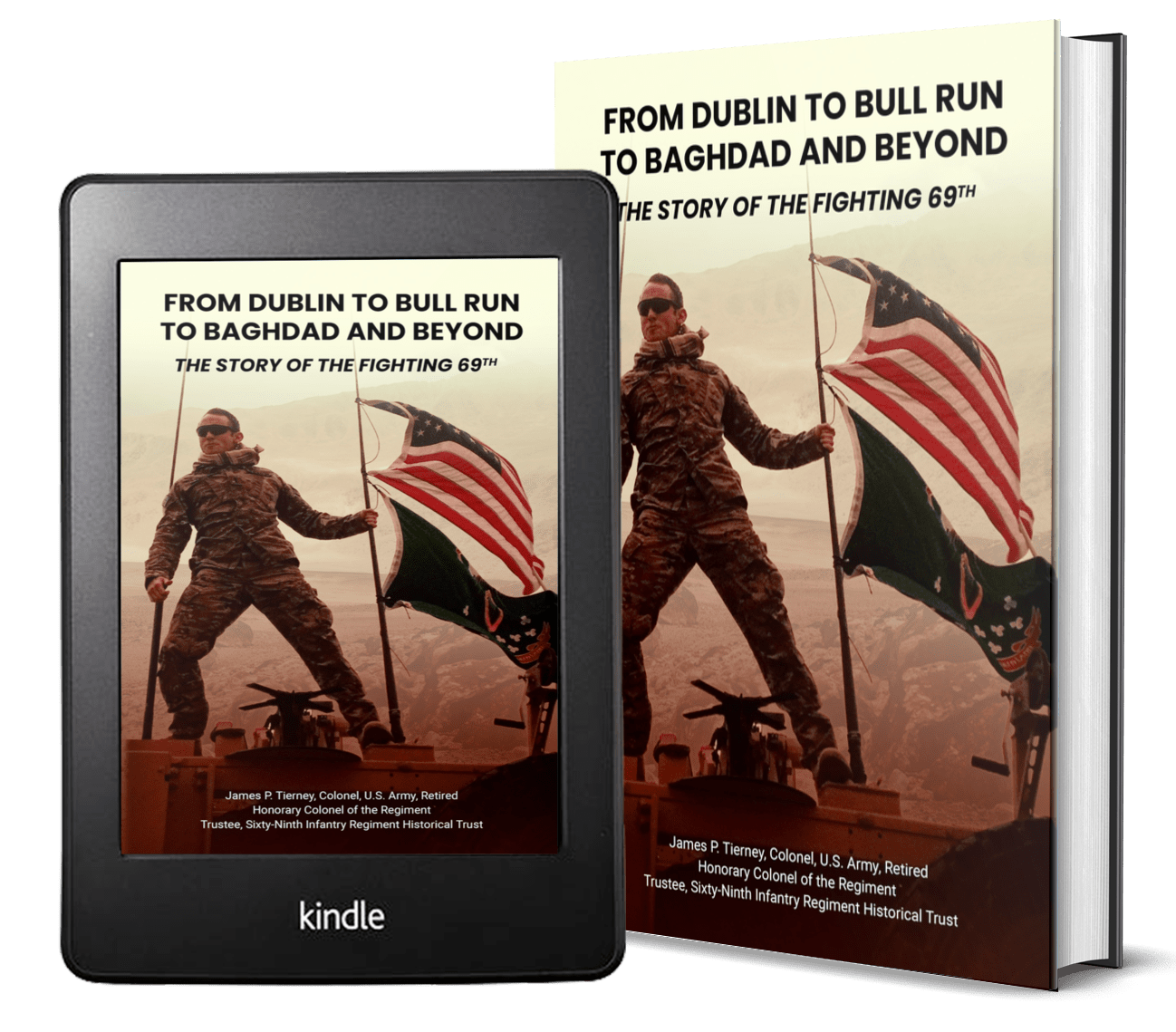
The 69th Infantry Regiment, known as “The Fighting 69th,” holds a special place in both American and Irish history. Tracing its roots back to the mid-19th century, this legendary regiment has not only played a key role in pivotal American conflicts but also served as a beacon of Irish pride and identity. As chronicled in From Dublin, to Bull Run, to Baghdad and Beyond: The Story of the Fighting 69th by James P. Tierney, the regiment’s story is deeply intertwined with the history of Irish immigration to the United States and the struggle for recognition and respect in a new homeland.
Irish Origins and the Formation of the 69th
The origins of the 69th Infantry Regiment can be traced back to the waves of Irish immigration during the 1840s, when famine and political unrest drove millions from Ireland to America. Many of these Irish immigrants, facing poverty, discrimination, and limited opportunities, sought community and solidarity within military units. The 69th Infantry Regiment was formed in 1849 in New York City, primarily by Irish-American immigrants, many of whom had strong connections to Irish nationalist movements such as Young Ireland.
Led by figures like Michael Doheny and Thomas Francis Meagher, the regiment was rooted in the Irish desire for independence and autonomy. The 69th became a symbol of resistance, drawing inspiration from both the oppression of the Irish people under British rule and the shared American ideals of liberty and freedom. As Tierney describes, the regiment was more than just a military unit; it was a cultural and political force, representing the hopes and struggles of the Irish-American community.
Civil War Contributions: A Fight for Two Nations
One of the most significant chapters in the 69th’s storied history came during the American Civil War. The regiment’s participation in the war is remembered for its courage, tenacity, and unbreakable spirit, particularly at the First Battle of Bull Run in 1861. Under the leadership of Colonel Michael Corcoran and later Thomas Meagher, the 69th fought with distinction, earning the nickname “The Fighting 69th.”
For many Irish immigrants, the Civil War represented a dual struggle. On the one hand, they were fighting to preserve the Union and end slavery in their adopted homeland. On the other, their participation in the war symbolized a fight for recognition and equality in America. Many hoped that their service would not only earn them acceptance but also demonstrate the strength and honor of the Irish people. In this way, the 69th Regiment became a vehicle for Irish-Americans to prove their loyalty and value to the United States, while still carrying the banner of Irish pride.
Impact on Irish-American Identity
The legacy of the 69th Infantry Regiment extends beyond the battlefield. It has played a crucial role in shaping the identity of Irish-Americans, offering a source of pride and a symbol of their contributions to American society. Through its actions, the 69th helped transform the perception of Irish immigrants in the United States, challenging the stereotypes of the day that painted the Irish as unruly and disloyal. Their military service and sacrifice earned them respect, not only from their fellow Americans but also from future generations of Irish-Americans.
Moreover, the regiment’s connection to the struggles for Irish independence continued to resonate long after the Civil War. Many of the regiment’s leaders were involved in Irish nationalist movements, including the Fenian Brotherhood, which sought to free Ireland from British rule. This dual identity—loyalty to both Ireland and the United States—has been a defining feature of the regiment’s history and its ongoing legacy.
The 69th Infantry Regiment’s rich history is a testament to the strength of the Irish-American community and its enduring contributions to the United States. As James P. Tierney’s book highlights, the regiment’s journey from the battlefields of Bull Run to the deserts of Baghdad is not just a military tale but a cultural one. The 69th has served as a bridge between two nations, preserving Irish culture while helping to shape American identity. For Irish-Americans, the Fighting 69th remains a powerful symbol of their heritage, their struggles, and their successes in a land they helped to defend.