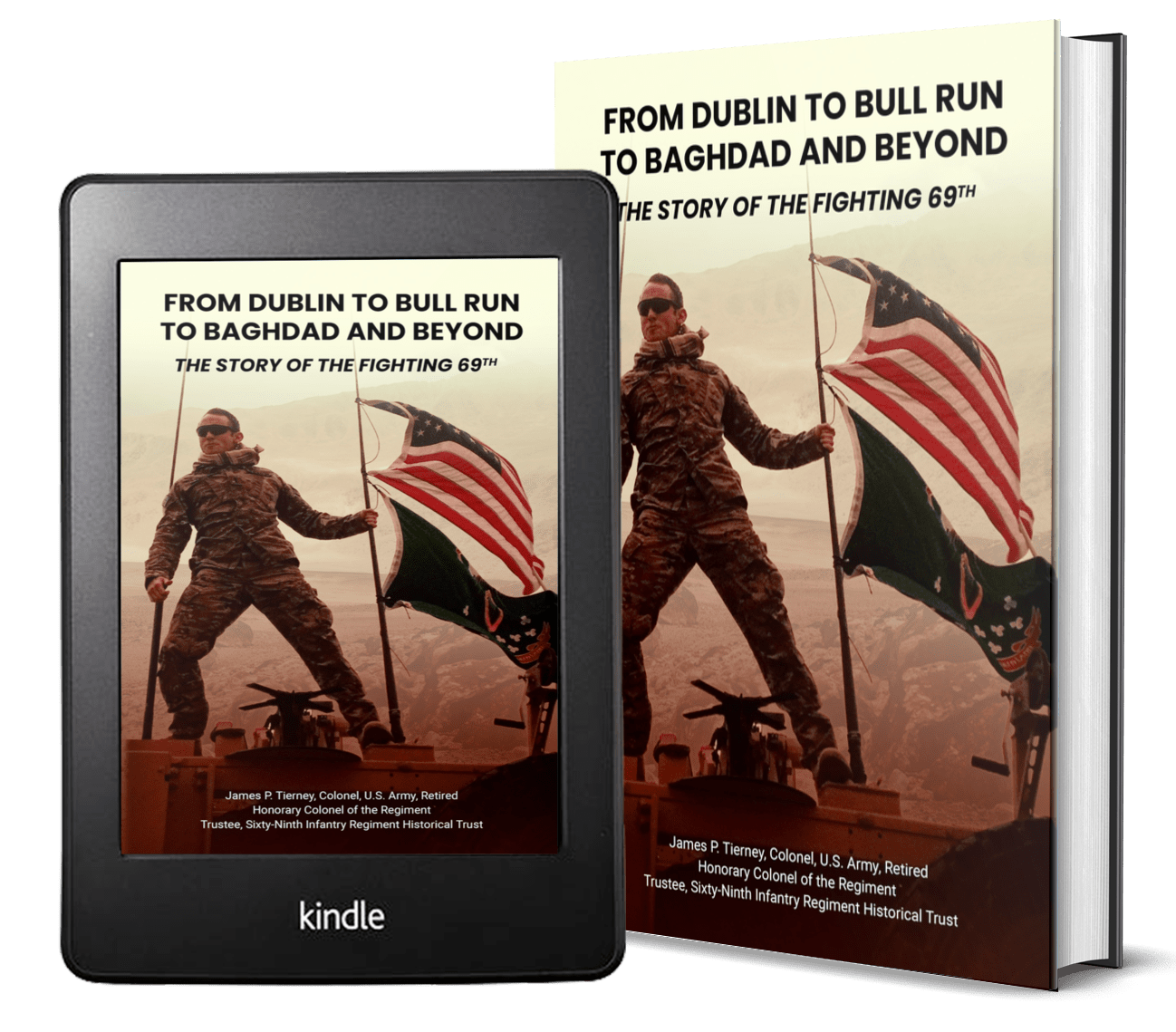
The 69th Infantry Regiment, known as “The Fighting 69th,” is a distinguished unit whose roots are deeply intertwined with the Irish nationalist movements of the 19th century. The regiment’s formation was influenced by the political and social turbulence in Ireland during the 1840s, particularly the Young Ireland movement, which sought Irish independence from British rule. Figures like Michael Doheny and Thomas Francis Meagher, both leaders of Young Ireland, played instrumental roles in shaping the identity and purpose of the 69th Infantry Regiment. As explored in From Dublin, to Bull Run, to Baghdad and Beyond: The Story of the Fighting 69th by James P. Tierney, the regiment emerged as a beacon of Irish-American pride, blending the struggle for Irish autonomy with the fight for equality and recognition in the United States.
Michael Doheny: The Architect of the Regiment
One of the most influential figures in the creation of the 69th Infantry Regiment was Michael Doheny, a lawyer, writer, and key leader of the Young Ireland movement. After the failed 1848 rebellion, Doheny fled to the United States, bringing with him a strong sense of Irish nationalism and a desire to continue the fight for Irish freedom. In New York City, Doheny quickly became involved in the Irish-American community, where he saw an opportunity to unite Irish immigrants around a shared cause.
Doheny played a critical role in organizing the early Irish militia units in New York that would eventually form the foundation of the 69th Infantry Regiment. His vision was to create a regiment that would serve both as a military force for the defense of the United States and as a symbol of Irish resistance. Doheny’s efforts culminated in the formation of the 69th in 1849, composed primarily of Irish immigrants who shared his passion for Irish independence.
In Tierney’s book, the formation of the 69th Regiment is seen as a direct outgrowth of Doheny’s commitment to Irish nationalism. The regiment not only represented the Irish community’s desire to contribute to their adopted country, but it also kept alive the hope of Irish independence. Doheny’s leadership and organizational skills were vital in transforming the Irish militias into a cohesive and effective fighting force.
Thomas Francis Meagher: The Voice of Irish Nationalism
Another key figure in the formation and early leadership of the 69th Infantry Regiment was Thomas Francis Meagher. Born into a wealthy family in Ireland, Meagher became a leading figure in the Young Ireland movement, known for his powerful oratory and passionate advocacy for Irish independence. His famous “Sword Speech” in 1846, in which he defended the right of nations to use force to achieve freedom, cemented his reputation as one of Ireland’s most influential nationalist leaders.
Like Doheny, Meagher was forced into exile after the failed 1848 rebellion. He eventually made his way to the United States, where he continued to champion the cause of Irish nationalism. In New York, Meagher joined the 69th Infantry Regiment, bringing with him the ideals of Young Ireland. He became an officer in the regiment and used his charismatic leadership to inspire Irish immigrants to enlist and fight for their new country while never forgetting the struggle for Irish freedom.
Meagher’s influence on the 69th was profound. His leadership during the American Civil War, particularly at the First Battle of Bull Run, further enhanced the regiment’s reputation for courage and resilience. Meagher viewed the 69th as not only an American fighting force but also as an extension of the Irish nationalist struggle. His speeches and actions helped shape the identity of the regiment as a unit that stood for both American unity and Irish independence.
The influence of Irish nationalism on the formation of the 69th Infantry Regiment is undeniable. Movements like Young Ireland and leaders like Michael Doheny and Thomas Francis Meagher provided the ideological foundation upon which the regiment was built. The 69th not only served as a formidable fighting force in American conflicts but also as a beacon of Irish pride and resistance. The legacy of the regiment continues to resonate, both as a symbol of Irish-American identity and as a testament to the enduring spirit of Irish nationalism.