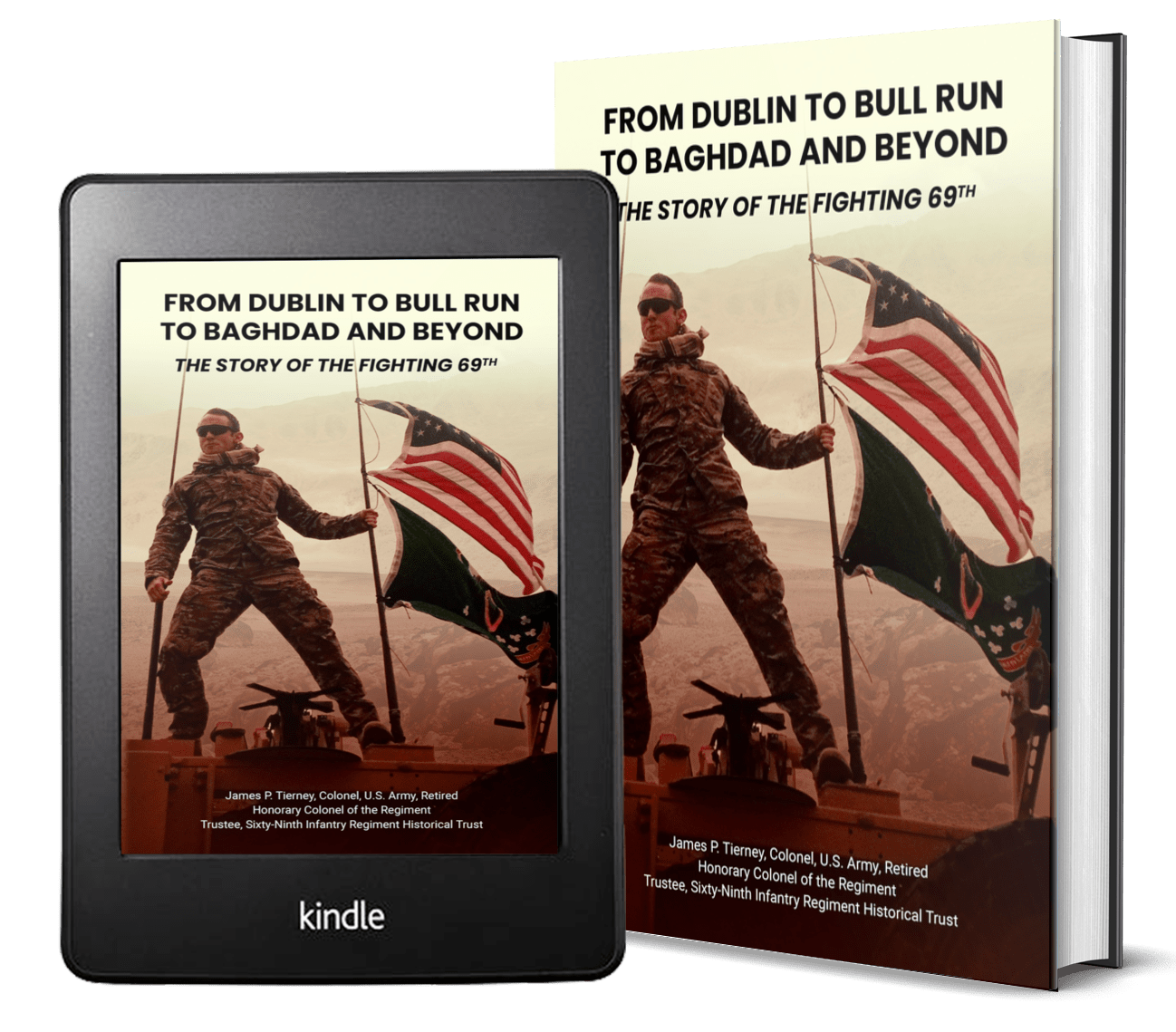
The Fighting 69th Infantry Regiment has always been more than just a military unit—it is a symbol of faith, heritage, and resilience. As detailed in Dublin, to Bull Run, to Baghdad and Beyond by James P. Tierney, the regiment’s strong ties to the Catholic Church have been present from its earliest days, offering spiritual strength and moral guidance to soldiers in times of war. The chaplains of the 69th played an essential role in providing comfort, last rites, and battlefield support, reinforcing the deep-rooted connection between the regiment and the Catholic faith.
The Catholic Foundation of the 69th Regiment
The 69th was founded by Irish immigrants, many of whom had fled British oppression in Ireland, where Catholicism was severely restricted. In America, the regiment became a home for Irish Catholic soldiers, where they could fight not just for their new country, but also in defiance of the injustices their people had suffered under British rule.
From its earliest battles, the 69th was accompanied by Catholic chaplains, who ensured that faith remained at the center of the soldiers’ lives. This bond became even more vital during the Civil War, when the horrors of battle drove many to seek spiritual reassurance.
Father Thomas Mooney: The 69th’s First Chaplain
The regiment’s first notable chaplain was Father Thomas Mooney, who joined the men in April 1861, just before they departed for Bull Run. During the regiment’s march to Washington, Father Mooney celebrated Mass between the paddle boxes of the Harriet Lane, the ship carrying them to battle.
Controversy and the “Blessing of the Cannon”
Father Mooney became infamous for an unusual event—the blessing of a cannon at Fort Corcoran, the 69th’s defensive position before Bull Run. The regiment’s leader, Colonel Michael Corcoran, requested that Mooney bless the artillery, hoping it would help them secure victory. However, when news of the blessing reached Archbishop John Hughes of New York, he was furious, as the Church did not sanction such practices. Mooney was ordered back to New York, but his influence remained strong, and his role as a battlefield chaplain set the precedent for future clergy serving with the regiment.
Chaplains in World War I and Beyond
During World War I, the 69th, now the 165th Infantry Regiment, was accompanied by Father Francis Duffy, one of the most famous chaplains in U.S. military history. Father Duffy became a legend among the troops, providing spiritual guidance in the trenches of France and offering last rites under heavy shell fire.
In World War II, Vietnam, and Iraq, chaplains continued to serve with the regiment, offering Mass on the battlefield, counseling soldiers suffering from PTSD, and ensuring that the Catholic faith remained a source of strength in the face of war’s hardships.
A Legacy of Faith and Service
Although the Fighting 69th is not now predominately Catholic, is chaplains still play a major role in unit morale. From its earliest days at Bull Run to modern deployments in the Middle East, its chaplains have been a source of hope, healing, and resilience.
Their presence on the battlefield ensured that soldiers did not face war alone, reinforcing the unbreakable bond between faith and valor that defines the 69th Infantry Regiment.