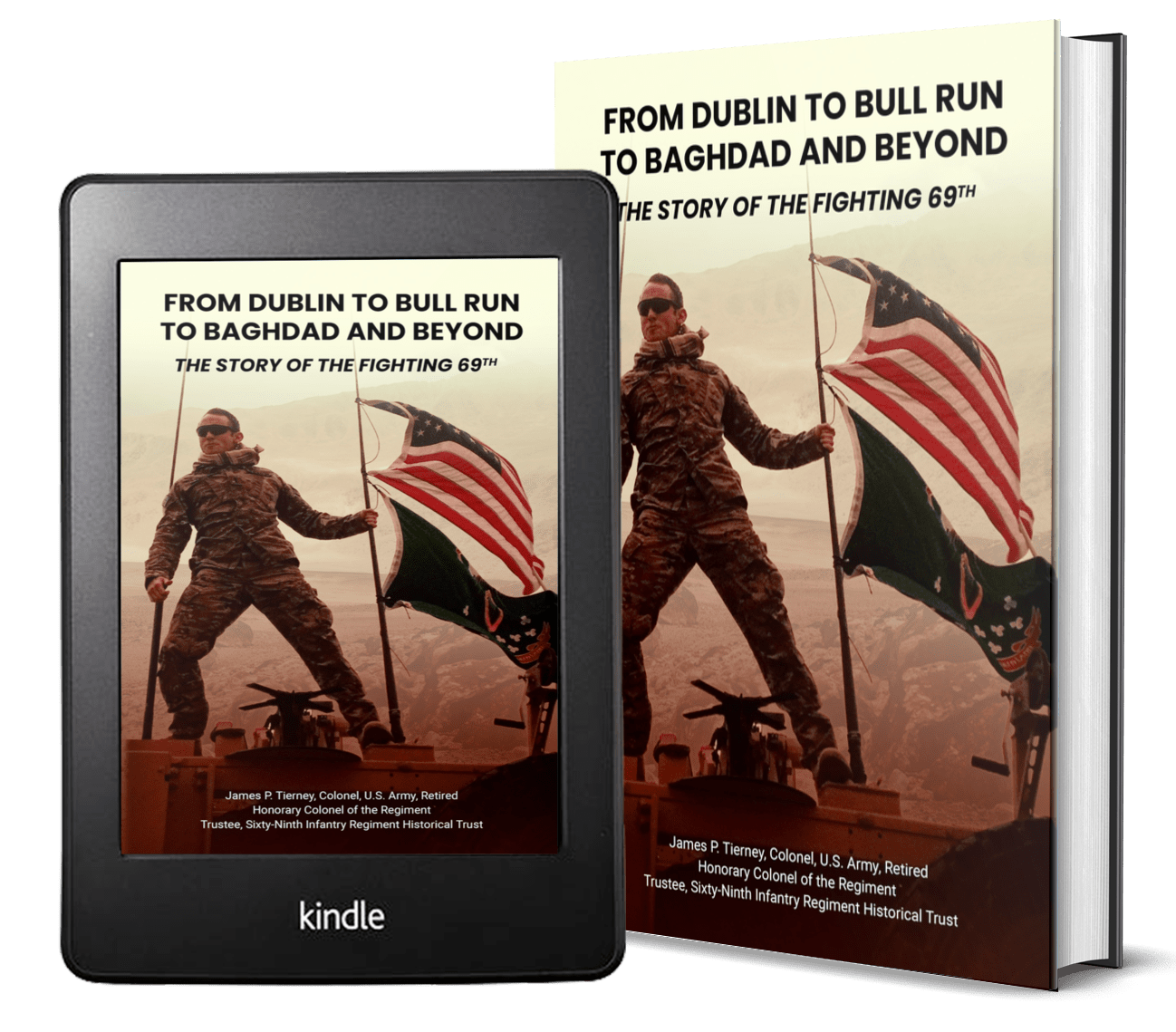
The 69th Infantry Regiment, known as the “Fighting 69th,” has a long and storied history that mirrors the evolution of combat roles in the U.S. Army. From its early days in the Civil War to modern-day missions, the regiment’s adaptability and tactical evolution underscore its resilience and commitment to duty. As James P. Tierney illustrates in From Dublin, to Bull Run, to Baghdad and Beyond: The Story of the Fighting 69th, this regiment has transitioned through numerous combat roles, evolving to meet the demands of each era while maintaining its core values.
1. The Civil War Era: Close-Quarter Combat and Massed Infantry Assaults
The 69th Regiment was formed in the mid-19th century during a time when close-quarter combat and massed infantry assaults were the primary military tactics. In battles such as Bull Run, the regiment was part of large formations facing opposing forces head-on. Equipped with rifled muskets and artillery, the soldiers relied on tactics that emphasized coordinated volleys, bayonet charges, and strategic positioning on the battlefield. The 69th’s role in these conflicts was as a frontline assault unit, taking on some of the bloodiest engagements of the Civil War.
These early experiences shaped the regiment’s identity as a fearless fighting unit, but they also showcased the need for flexibility and quick adaptation. The regiment’s actions during the Civil War left a lasting impact on its members, establishing a tradition of valor and resilience that would continue in future conflicts.
2. World War I and II: Trench Warfare, Mechanized Assaults, and Combined Arms
By the time the 69th Regiment was called upon in World War I, the nature of warfare had changed significantly. Trench warfare, combined arms, and mechanized assaults defined the combat strategies of the early 20th century. Redesignated as the 165th Infantry Regiment and incorporated into the larger structure of the U.S. Army’s 42nd “Rainbow” Division, the 69th adopted new tactics and technologies, including the use of machine guns, tanks, and poison gas.
During World War II, the regiment’s adaptability was further tested. The Fighting 69th had to quickly master mobile warfare tactics, which emphasized speed, precision, and coordination with armored units and air support. The regiment’s ability to shift from traditional infantry tactics to more dynamic combat roles underscored its capacity for evolution. This adaptability in trench and mechanized warfare allowed the regiment to remain a formidable force.
3. The Cold War Era: Guarding Against Nuclear Threats and Supporting Civil Operations
Following World War II, the 69th Regiment’s role continued to evolve as the U.S. military shifted focus toward defense against nuclear threats and involvement in civil operations. As part of the National Guard, the regiment was tasked with domestic responsibilities, including disaster response and civil defense, while maintaining combat readiness in case of a Soviet threat. This period required soldiers to be trained not only in combat but also in emergency response and humanitarian support, expanding the regiment’s operational scope beyond traditional warfare.
During this era, the regiment’s members continued to embrace their dual role as soldiers and community protectors, strengthening their ties to both military and civilian life.
From the Civil War to present-day missions, the Fighting 69th’s combat roles have been as diverse as the challenges it has faced. The regiment’s adaptability—whether in trench warfare, mechanized assault, counterinsurgency, or peacekeeping—underscores its unwavering dedication to protecting the values it holds dear. Through each conflict, the Fighting 69th has honored its legacy, proving that its courage and resilience are as timeless as its history.