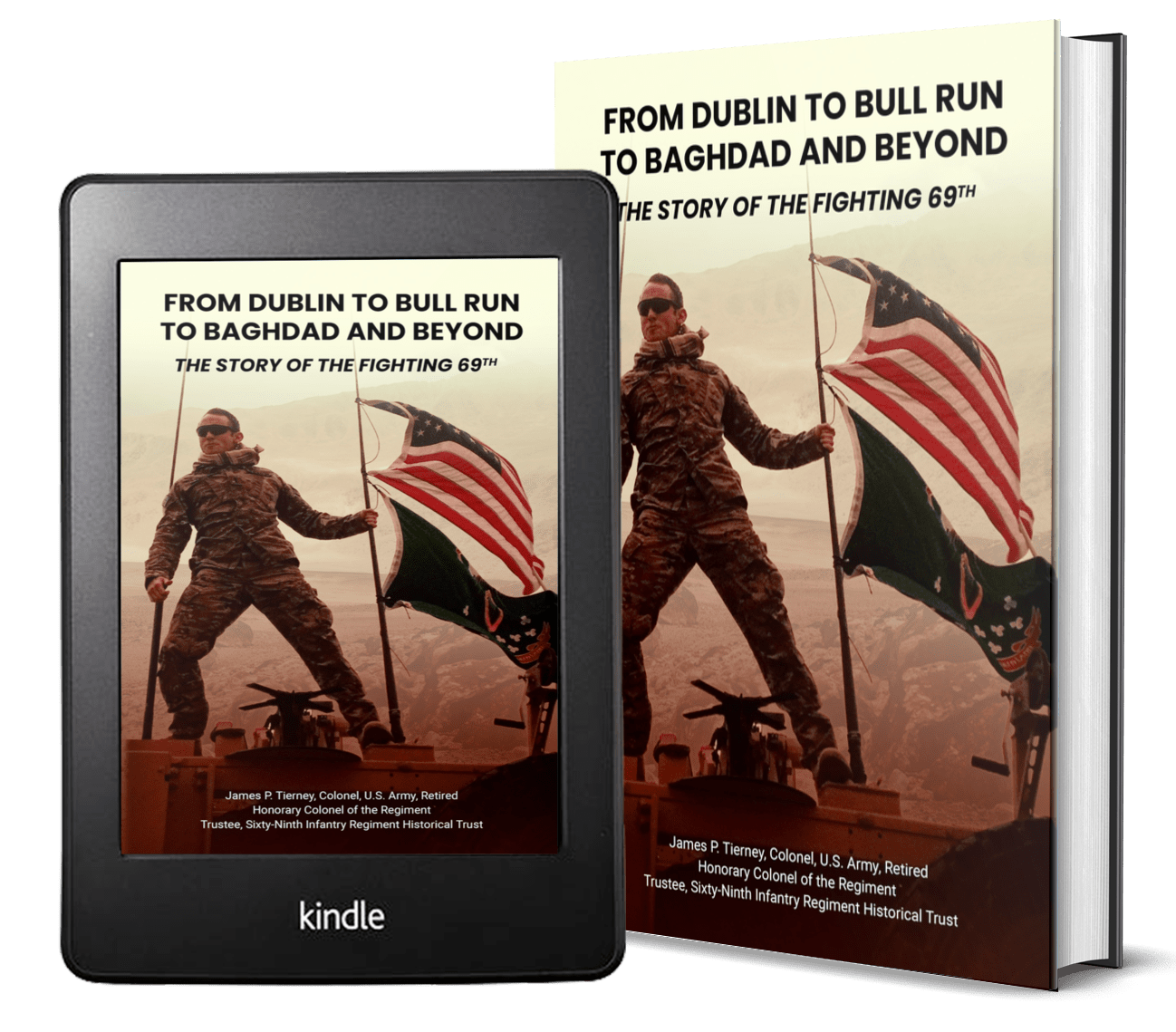
The 69th Infantry Regiment, famously known as the “Fighting 69th,” has become more than just a military unit for the city of New York. Its presence and influence weave through the city’s cultural and historical fabric, making it a beloved symbol of resilience, honor, and community. For generations, the regiment has played a key role in New York City’s military history and Irish-American heritage, most notably through its participation in the annual St. Patrick’s Day Parade. As James P. Tierney illustrates in his book From Dublin, to Bull Run, to Baghdad and Beyond: The Story of the Fighting 69th, the 69th Infantry Regiment has been an essential part of the city’s identity, honoring both its Irish roots and American patriotism.
A St. Patrick’s Day Tradition and Celebration of Heritage
Perhaps no event illustrates the regiment’s importance to New York City’s cultural life better than the St. Patrick’s Day Parade. The 69th Infantry has marched in this iconic parade since the mid-19th century, donning sprigs of boxwood as a symbol of their Irish heritage and military pride. Each year on March 17th, they lead the way down Fifth Avenue, a position of honor that highlights the close bond between the regiment and the city’s Irish-American community. The parade is more than a celebration; it’s a tribute to the legacy of Irish immigrants who joined the regiment, fought bravely for their new country, and left a lasting impact on New York’s history.
Onlookers at the parade see the 69th Infantry as a bridge between generations, honoring those who came before and inspiring future members. The regimental wolfhound mascot, proudly trotting alongside the soldiers, is a reminder of the regiment’s steadfast loyalty and tenacity, while their green flags evoke memories of the regiment’s past battles and sacrifices.
New York’s Protector and Pride
The Fighting 69th’s reputation as a fierce and courageous unit is one reason it holds such a place of honor in New York. Since its inception, the regiment has been a proud defender of the United States, from Civil War battlefields to modern-day combat zones in the Middle East. The unit’s courage in combat has inspired stories and songs, becoming part of New York City’s patriotic lore. Families across the city share stories of relatives who served in the regiment, reinforcing the 69th’s role as a family-centered, community-supported unit.
In addition to combat roles, the 69th has been instrumental in responding to crises closer to home. When New York City faced its darkest days after the attacks on September 11, 2001, members of the regiment were among the first responders. They assisted with rescue efforts and provided a comforting presence, illustrating the regiment’s dedication to serving not only on foreign soil but also within their own community.
The Fighting 69th’s Impact on New York’s Cultural Fabric
The regiment’s historical presence in New York is celebrated not just in parades and holidays, but also through monuments, memorials, and community events. The New York State Military Museum and Veterans Research Center preserves much of the regiment’s history, and various New York landmarks commemorate its contributions. These include statues, plaques, and other dedications across the city, reminding residents and visitors of the Fighting 69th’s enduring legacy.
Each event, monument, and shared story adds another layer to New York City’s cultural fabric, underscoring the Fighting 69th’s dual role as both military unit and community pillar. Through these commemorations, the regiment continues to inspire a sense of unity, courage, and pride. As Tierney’s From Dublin, to Bull Run, to Baghdad and Beyond recounts, the 69th Infantry Regiment has been a central figure in the city’s history, a beacon of loyalty, and a testament to the lasting impact of Irish-American contributions to New York and beyond.