Music has always been a powerful tool for fostering unity, boosting morale, and creating a sense of identity, particularly in military contexts. For the Fighting 69th Infantry Regiment, the regimental march, Garryowen, has played a vital role in encapsulating the spirit of the unit. A lively and proud tune, Garryowen is deeply embedded in the regiment’s culture and history, serving as a source of inspiration and connection for its soldiers.
The Origins of Garryowen
Garryowen is an Irish folk tune that dates back to the 18th century, named after a neighborhood in Limerick, Ireland. The song gained popularity for its upbeat tempo and was traditionally associated with Irish revelry. By the 19th century, it had crossed the Atlantic with Irish immigrants, becoming a favorite among Irish-American communities.
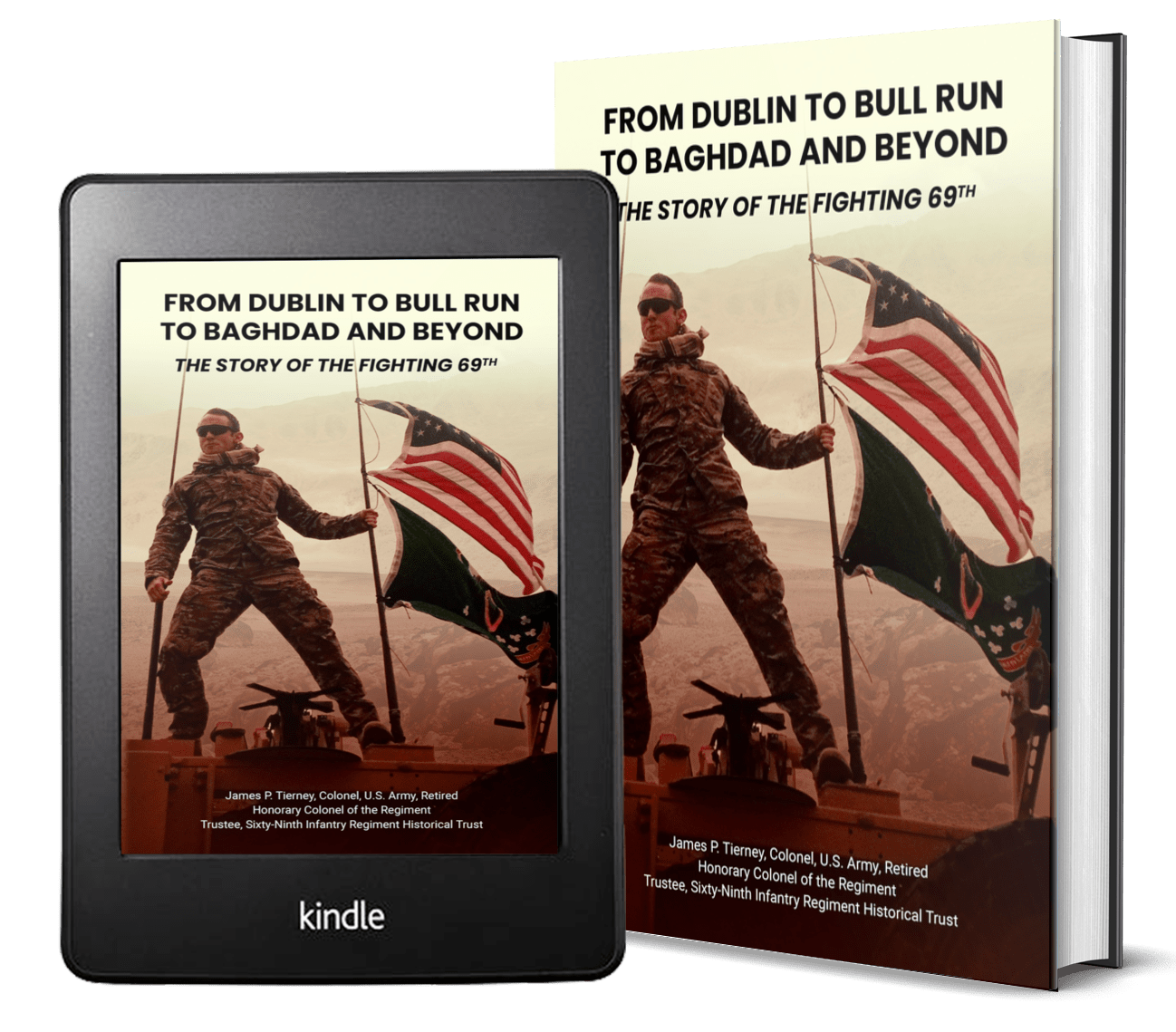
James Tierney’s From Dublin to Bull Run to Baghdad and Beyond notes that Garryowen was adopted as the un-official official regimental march of the 69th Infantry Regiment in recognition of the unit’s Irish roots. Its quick, jaunty rhythm reflected the spirited nature of the regiment and provided a cultural touchstone for its members.
Morale on the March
For soldiers, music is more than just entertainment—it is a lifeline during difficult times. In the heat of battle or the monotony of long marches, songs like Garryowen lift spirits and provide a sense of camaraderie. The Fighting 69th used the tune to energize troops, motivate them in challenging moments, and create an atmosphere of unity.
During the Civil War, Garryowen became synonymous with the regiment’s resilience and determination. Tierney recounts that as the soldiers of the 69th marched into battles like Bull Run, the regimental band played the tune to bolster their morale and remind them of the shared purpose that brought them together.
A Symbol of Identity
The choice of Garryowen as the regimental march also served to strengthen the 69th’s identity as an Irish-American unit. The song tied the regiment to its heritage, reminding soldiers of their ancestors’ struggles and triumphs. It became a musical representation of the regiment’s motto, “Gentle when Stroked, Fierce when Provoked,” capturing both its cultural pride and fierce determination.
In peacetime, Garryowen continues to play a significant role in regimental ceremonies, parades, and gatherings. The tune connects past and present members of the regiment, serving as a reminder of the traditions and values that have defined the Fighting 69th for over 175 years.
A Legacy of Resilience
The enduring popularity of Garryowen within the 69th Regiment speaks to the universal power of music to transcend time and circumstance. From the battlefields of the Civil War to modern deployments, the tune has provided comfort, strength, and a sense of belonging to soldiers who march under its banner.
As Tierney emphasizes, Garryowen is more than just a march; it is a living symbol of the Fighting 69th’s resilience and unity. Whether played in the midst of conflict or in celebration of peace, it continues to inspire and connect generations of soldiers.