Nestled near the Aqueduct Bridge outside Washington, D.C., Camp Corcoran served as a hub for the 69th Regiment during the early days of the Civil War. Named after their commanding officer, Colonel Michael Corcoran, the camp was more than just a military installation—it was a temporary home that encapsulated the regiment’s unique culture, camaraderie, and challenges.
Daily Life in Camp
Life at Camp Corcoran was a mix of rigorous military discipline and moments of respite. Soldiers rose early, often before sunrise, to the sound of the bugle. The day began with drills, including marching and weapon training, crucial for preparing the regiment for the impending battles. Physical exertion was a constant, whether it involved building fortifications or carrying out field exercises.
Meals were simple but hearty, consisting primarily of hardtack, salted pork, and beans. Occasionally, soldiers supplemented their rations with food purchased from nearby towns or sent by families. Cooking was done over open fires, and the communal meals provided an opportunity for soldiers to bond.
Religious practices played a significant role in daily life. Mass was a regular event, often celebrated by Chaplain Father Thomas Mooney. His presence was a source of comfort, and he frequently heard confessions and offered spiritual guidance, especially as the regiment prepared for battle.
Challenges and Hardships
The soldiers at Camp Corcoran faced numerous challenges. The harsh realities of military life, including long hours of labor and limited comforts, tested their resilience. Building the camp’s fortifications, which included a massive fort measuring 650 by 450 feet with 14-foot-high walls, was an arduous task completed in record time by the determined Irishmen.
The weather added another layer of difficulty. During one period, a sudden downpour left the camp drenched, and soldiers endured sleepless nights in wet clothing. Morale fluctuated, with some soldiers growing restless over misunderstandings about their service terms. Tensions occasionally arose, but Colonel Corcoran’s leadership and clear communication helped maintain unity.
The Culture of the Fighting 69th
What set the 69th Regiment apart was its vibrant culture, deeply rooted in Irish heritage. Music and storytelling were staples of camp life. Soldiers sang traditional Irish ballads and recounted tales of their homeland, fostering a sense of connection and pride. The regiment’s mascot, the Irish Wolfhound, and their motto, “Gentle when Stroked, Fierce when Provoked,” further reinforced their identity.
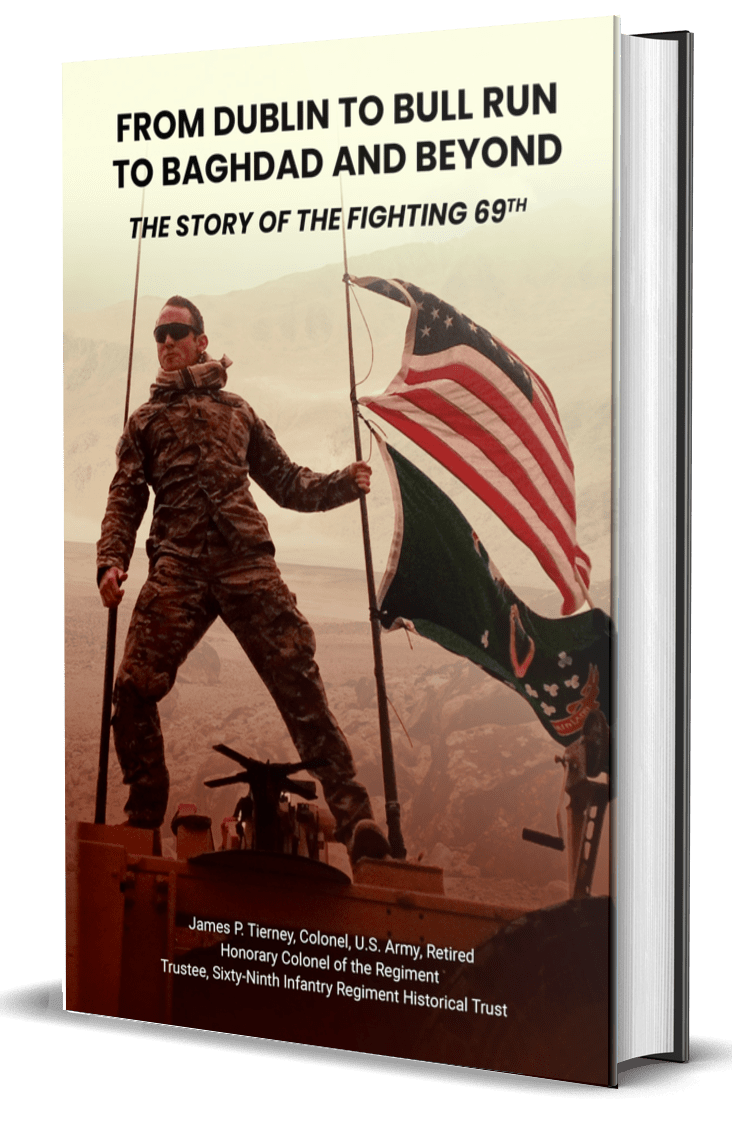
Symbolism played a vital role in uniting the soldiers. The regiment’s green flag, presented after Corcoran’s refusal to parade before the Prince of Wales, was a powerful emblem of their dual allegiance to Ireland and America.
Legacy of Camp Corcoran
Camp Corcoran was more than a waypoint in the 69th Regiment’s Civil War journey—it was a crucible where the regiment’s spirit was forged. The bonds formed and traditions upheld during those early days would carry them through the challenges of Bull Run and beyond. Today, the stories of Camp Corcoran remind us of the resilience and camaraderie that defined the Fighting 69th.
Book Link: https://www.amazon.com/dp/1917553013